CWRA Executives Expand/Collapse
President
André Saint-Hilaire
President-Elect
Ute Holweger
Treasurer
Ed Dean
Secretary
Brenda Toth
Past-President
Andrew Szojka
President CANCID
David Hill
Executive Director
Rick Ross

Tools and Technologies for Managing Water in Prairie and Northern Regions

Manitoba Branch
The Greenwood Inn, 1715 Wellington Avenue, Winnipeg, Manitoba
March 9-10, 2011

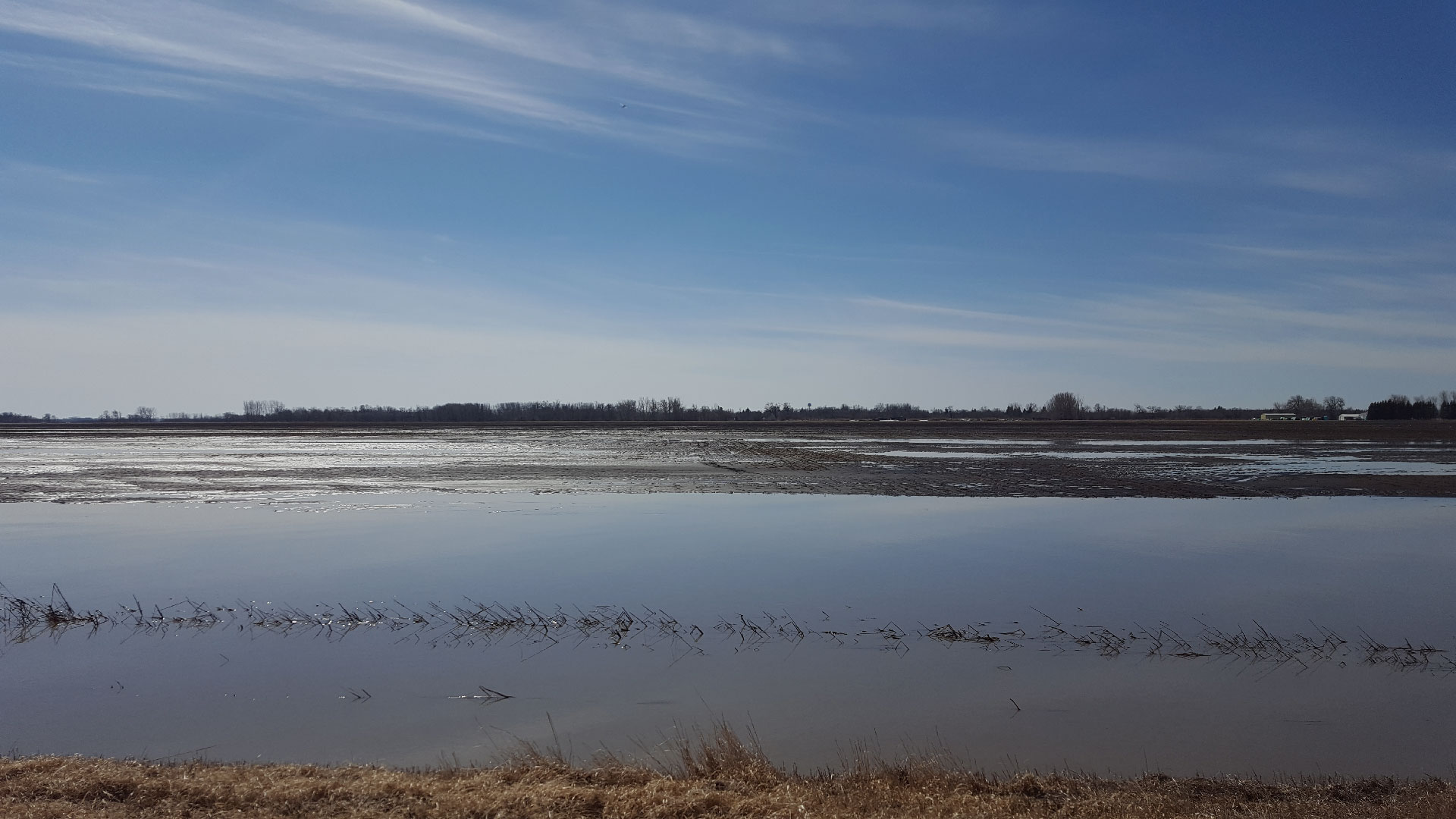
Managing water in regions that are dominated by snowmelt runoff can be a challenging task due to a variety of factors which include seasonal variations, land use and management practices, water availability and distribution, water quality, as well as, climate change vulnerability and adaptation. These issues need to be taken into account when making water management decisions. Innovative tools and technologies are being developed and applied to address these challenges. To gain a better understanding on how to manage water more effectively in prairie and northern environments, the Manitoba Branch of the Canadian Water Resources Association (CWRA) held a two-day conference on Tools and Technologies for Managing Water in Prairie and Northern Regions.

Conference Program

  • Keynote Address: Dr. Howard Wheater, Canada Excellence Research Chair in Water Security, University of Saskatchewan

  • Keynote Speaker: Dr. David, Watershed Systems Research Chair, University of Manitoba

  • Session A: Landscape Planning and Watershed Management
    Jonathan Wiens, Source Water Protection Planning in Manitoba
    Jason Vanrobaeys, The Red-Assiniboine Project – Water Quality Impacts of Landscape Change Scenarios at a Watershed Scale
    Henry David Venema, The Watershed of the Future: Reducing Lake Winnipeg nutrient loads through Bioeconomy innovation

  • Session B: Water Management and Modelling
    Bin Luo, Method of design flow analysis for the province of Manitoba - regional, transitional, and rational approach
    Jim Friesen, Application of Hydrodynamic Modeling to Quantify Effects of Channel Storage on Flow Rates and Drainage Design
    Dan Beveridge, Hydrologic Indices for the Prairie Provinces

  • Session C: Landscape Planning and Watershed Management
    Christopher Penner, Bio-technical and Naturalization Alternatives to Conventional Urban Landscaping
    Susan Witherly, Estimating Wetlands from CanVec Data: A Geoprocessing and Statistical Modeling Approach
    Rob Officer, Establishing a Process for a Wetland Vegetation Rehabilitation and Management program focused on Reed Canarygrass (Phalaris arundinacea): A Parkland Mews Case Study

  • Session D: Water Management and Modelling
    Melissa Haresign, Hydraulic Data Acquisition and Modeling of the Netley-Libau Marsh
    Tyson Ehnes, Estimation of Design Flows for Small Watersheds with Consideration of Fish Passage
    Scott Toews, Physical and Numerical Modeling of Culvert Hydraulics

  • Session E: Water Quality and Nutrient Management
    Dave Huebert, Wastewater Systems Effluent Regulations: Concerns and Implications of Deficiencies in the Draft Regulations
    Don Flaten, Agricultural phosphorus in our watersheds: shortage or glut?
    Tamara Horechko, Investigating the effectiveness and practicality of using Vegetative Filter Strips to manage nutrients in livestock pen runoff

  • Session F: Water Management and Modelling
    Christian Propp, Application of GIS Software and Geospatial Hydrology Toolkits in Hydrologic Models and Watershed Planning
    Karl-Erich Lindenschmidt, A GIS approach to define the hydro-geomorphological regime for instream flow requirements using geomorphic response units
    Jeremy Greshuk, Peak Flow and Runoff Volume Estimation Using Historical Weather Radar Maps

  • Session G: Water Management and Modelling Chair: Marc St. Laurent
    Marc St. Laurent, Numerical Modelling Tools Used for the Physical Environment Assessment of the Proposed Keeyask Generating Station- Please contact author for details
    William DeWit, Reservoir Water Temperature and Dissolved Oxygen Modeling for the Proposed Keeyask Generating Station - Please contact author for details
    Ben Schmidt, Manitoba Hydro Physical Environment monitoring systems

  • Session H: Water Quality and Nutrient Management
    Shane Gabor, The Impact of Wetland Loss in Manitoba
    Pascal Badiou, Discharge of nutrients through drained wetlands in southwestern Manitoba
    Armand Belanger, Vegetative Buffer strips effectiveness in removing nutrients

  • Session I: Water Management and Modelling
    Monica Mannerstrom, Ice-Related Flooding in Prince George “Risk Assessment and Management Options”
    Shawn Cruise, Flood of 2011: How Infrastructure & Transportation will use GIS Technology to Inform and Enable
    Lance Yohe, Finding Long Term Flood Solutions

  • Session J: Water Management and Modelling
    Russell Schmidt, Water Quality, Erosion and Sedimentation Monitoring Program on the Burntwood River and Nelson River Systems
    Habib Ahmari, Characterization of Sediment Regime in the Nelson River: Current State and Future Direction
    Steven Bohrn, Lessons learned: setting up multiple hydrological models in northern Manitoba

  • Session K: Water Quality and Nutrient Management Chair: Kristina Koenig
    Mike McKernan, False Positives’ Produced by the Metal Mines Environmental Effects Monitoring Program; Implications for Mine Operations and Mine Closure
    Ian Halket, Mass Transport in Rivers
    Tariq Aziz, Suspended sediment monitoring using the LISST sampler

  • Session L: River and Lake Ice
    Milan Bijeljanin, Prediction of River Ice Formation Processes on the Upper Nelson River Through Numerical Modelling
    Peter Hillius, The Challenges of Field Data Collection in Northern Manitoba - The Conawapa Experience
    Karl-Erich Lindenschmidt, Ice jam Modelling of the Red River in Winnipeg

  • Session M: Water Management and Modelling
    Tricia Stadnyk, Towards Simulating Streamflow in Ungauged Basins Utilizing the isoWATFLOOD Hydrological Model: Distribution of Stable Water Isotopes Across Canada
    Kristina Koenig, Comprehensive Studies of Climate Change Impacts on Manitoba Hydro's Water Resources: Current Accomplishments and Future Vision

  • Session N: Policy and Governance
    Kristine Koster, Habitat Banking: A Regulatory Tool for Achieving Effective Compensation
    Robin Gislason , The Red River Basin Commission; Bringing people together, Building a basin perspective, and Working together on today's challenges

  • Session O: Water Management and Modelling
    Mark Lee, Assessment of Potential Impacts of a Fishing Lake Outlet on the Assiniboine River in Manitoba
    Jason R. Westmacott, Lake Winnipeg Water Management: Priorities, Uncertainty and Accountability